
Il Second Conditional: Situazioni Ipotetiche
📌 Indice della Lezione
🎯 Obiettivo della lezione
In questa lezione imparerai a usare il Second Conditional 📖 per parlare di situazioni ipotetiche, immaginarie o poco probabili. Capirai come formarlo 🧠, quando usarlo ✍️ e farai subito pratica reale con il test interattivo in fondo alla pagina! 🚀
🌟 Cos’è il Second Conditional?
Usiamo il Second Conditional per esprimere ipotesi nel presente o nel futuro che sono poco probabili, irrealizzabili o puramente immaginarie 🔮:
- Situazioni immaginarie: If I had a lot of money, I would travel the world. ✈️🌍 (Se avessi tanti soldi, viaggerei per il mondo.)
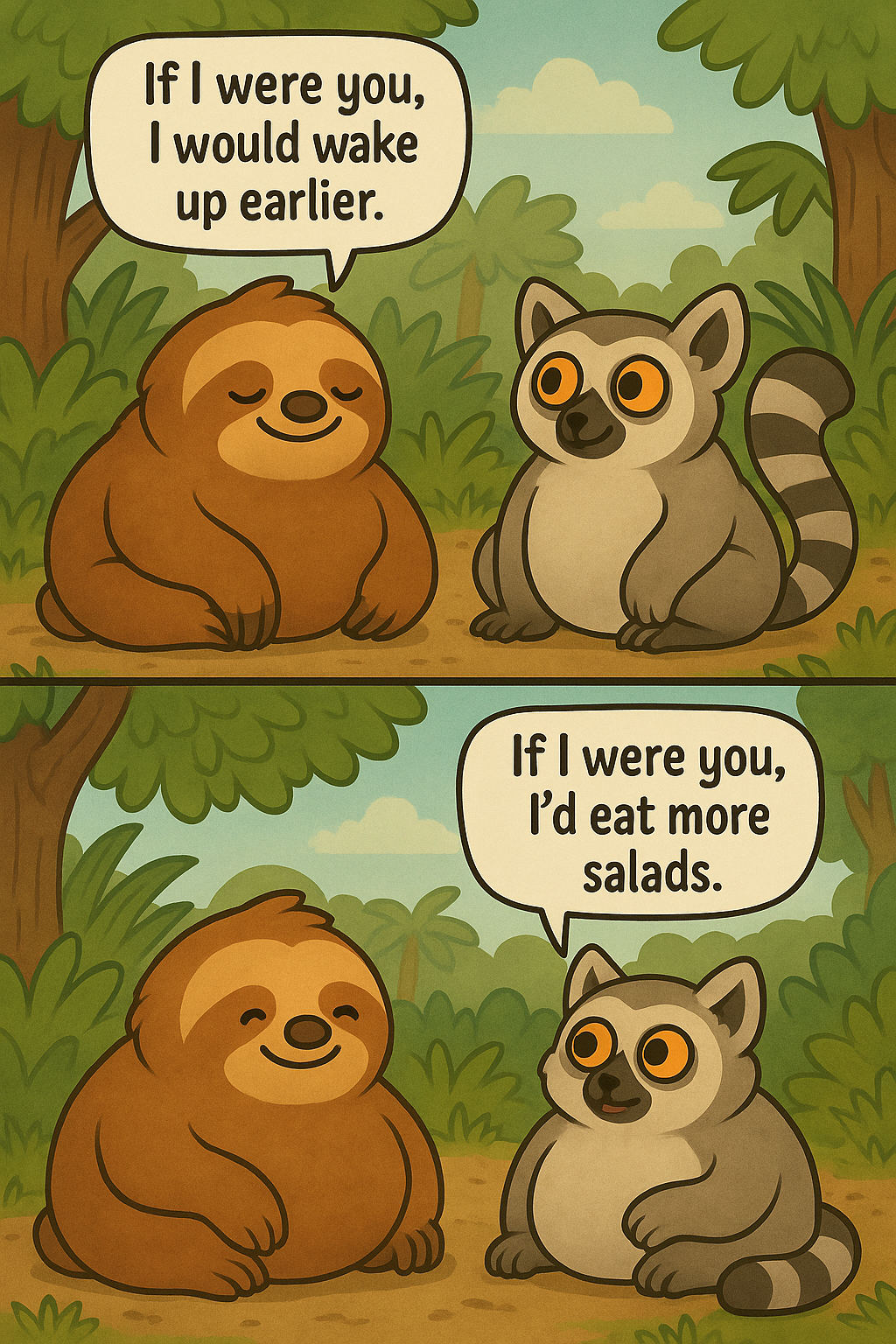
- Consigli ipotetici: If I were you, I would accept the job. 💡 (Se fossi in te, accetterei il lavoro.)
- Eventi improbabili: If it rained now, we would stay inside. ☔ (Se piovesse ora, resteremmo dentro.)
🔍 Come si forma il Second Conditional?
La struttura è composta da due parti principali:
IF + Past Simple , WOULD + Verbo Base
| Proposizione Ipotetica (If-Clause) | Proposizione Principale (Main Clause) | Esempio Completo |
|---|---|---|
| If + Past Simple | would + verbo base | If she knew the answer, she would tell you. 🧠 |
🔄 Inversione, Contrazioni e il caso “If I WERE”
- Inversione delle frasi: Puoi invertire l’ordine senza cambiare il significato. Se la frase inizia con would, non si usa la virgola!
➔ I would travel the world if I had a lot of money. - Contrazione di Would: Nell’inglese parlato, would si contrae spesso in ‘d:
➔ I’d buy a house, he’d help us, she’d come with us. - Il verbo essere (“If I were”): Nel Second Conditional formale, il verbo be usa were per tutte le persone (compresi I, he, she, it):
➔ If I were you, I wouldn’t do that. (Formale e consigliato)
➔ If I was you… (Accettato nel parlato informale).
🧩 Schema riassuntivo – Second Conditional
| Parte con “If” | Parte con “Would” | Esempio |
|---|---|---|
| If + Past Simple | would + verbo base | If I won the lottery, I would buy a house. 🏡 |
| If + Past Simple (negativo) | wouldn’t + verbo base | If he didn’t study, he wouldn’t pass. 📚 |
❓ Dubbi frequenti
- Il verbo dopo “if” è sempre al Past Simple?
➔ Sì! Anche se traduciamo in italiano con il congiuntivo imperfetto (“se avessi”), in inglese si usa sempre il Past Simple. - Posso usare “will” dopo “if”?
➔ ❌ Assolutamente no! Will si usa solo nel First Conditional. Nel Second Conditional si usa would nella frase principale. - Qual è la differenza tra First e Second Conditional?
➔ Il First Conditional (if + present, will + base) parla di situazioni reali e probabili. Il Second Conditional (if + past, would + base) parla di ipotesi immaginarie o improbabili.
🚫 Errori comuni da evitare
| Errore ❌ | Corretto ✅ |
|---|---|
| If I will have money, I would travel. | If I had money, I would travel. |
| If she knows the answer, she would tell you. | If she knew the answer, she would tell you. |
| If I had money, I would to buy a car. | If I had money, I would buy a car. (Senza ‘to’!) |
📌 Ricorda la regola d’oro
- ✔️ Second Conditional ➔
If + Past Simple, would + verbo base - ✔️ Usalo per situazioni immaginarie o consigli (If I were you…)
- ✔️ Mai mettere will o would subito dopo IF!
Allenati subito con il test interattivo qui sotto! 🔮✨
Gap Fill & Translation Exercises
Mettiti alla prova! Nelle prime 15 frasi, inserisci la forma corretta dei verbi al Second Conditional. Nelle ultime 5, traduci in inglese.