
Advanced Modality & Past Speculation (C1/C2)
📌 Indice della Lezione
🎯 Obiettivo della lezione
A livello C1 e C2 (Cambridge Proficiency), padroneggiare la modalità significa esprimere gradazioni di certezza, necessità retrospettiva, rimpianto ed eventi prestabiliti. Imparerai a distinguere sfumature critiche come needn’t have done rispetto a didn’t need to do, a gestire la speculazione continua nel passato e a padroneggiare le strutture modali formali come be to, bound to e set to. 🚀
🔮 1. Speculazione e Deduzione al Passato
Per speculare su eventi passati con vari gradi di certezza si combinano i verbi modali con l’infinitive composto (have + past participle) o progressivo:
| Verbo Modale + Infinito Composto | Grado di Certezza / Significato | Esempio C1/C2 |
|---|---|---|
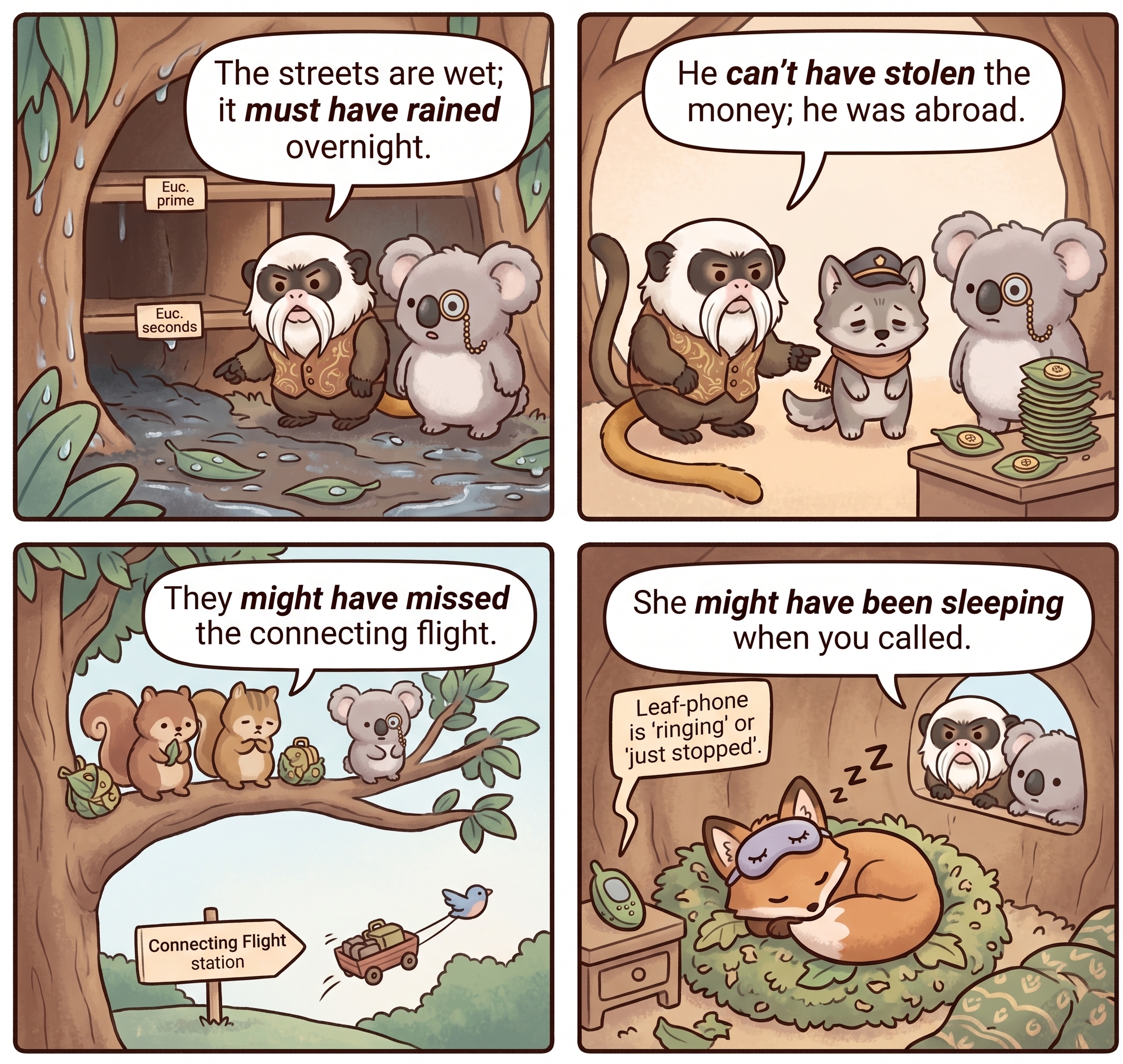
| Must have + Participio Passato | Certezza logica positiva nel passato (99%) | The streets are wet; it must have rained overnight. |
| Can’t / Couldn’t have + Participio | Impossibilità logica nel passato (99%) | He can’t have stolen the money; he was abroad. |
| May / Might / Could have + Participio | Possibilità / Incertezza nel passato (30-50%) | They might have missed the connecting flight. |
| Might / Could have been + -ing | Speculazione su un’azione prolungata nel passato | She might have been sleeping when you called. |
Needn’t Have Done vs Didn’t Need To Do
Una distinzione fondamentale testata in Use of English:
- Needn’t have done: L’azione è stata compiuta, ma a posteriori si è rivelata inutile.
“You needn’t have brought an umbrella; it didn’t rain.” (Hai portato l’ombrello, ma non serviva). - Didn’t need to do: L’azione non era necessaria; l’esecutore poteva o meno averla compiuta.
“I didn’t need to buy tickets because entry was free.” (Non era necessario comprare i biglietti).
⚙️ 2. Come costruirle
Per applicare correttamente le strutture modali avanzate nei test di trasformazione e nel writing, segui questi tre passaggi sintattici:
- Passaggio 1: Valuta la collocazione temporale e l’aspetto dell’azione.
– Azione puntuale conclusa nel passato ➔ Modale + have + Participio Passato.
– Azione continuativa nel passato ➔ Modale + have been + -ing.
– Disposizione formale futura nel passato ➔ was/were to have + Participio Passato. - Passaggio 2: Seleziona il valore modale esatto.
– Obbligo mancato/rimpianto ➔ should have / ought to have.
– Certezza ineluttabile futura ➔ be bound to + forma base.
– Azione pianificata ufficialmente ➔ be set to / be due to + forma base. - Passaggio 3: Fai attenzione ai verbi senza ausiliari do/does.
I verbi modali puri (must, can, may, might, should, could) sono seguiti dall’infinito senza to, mentre espressioni come ought to, be bound to, be set to richiedono la preposizione to.
📜 3. Strutture Modali Formali (Be to, Bound to, Set to)
Strutture ad alto registro per esprimere accordi formali, destino o probabilità quasi certa:
| Struttura Formale | Significato / Uso Formale | Esempio C1/C2 |
|---|---|---|
| Be to + Forma Base | Ordini ufficiali, disposizioni diplomatiche o eventi futuri prestabiliti. | The Prime Minister is to visit Washington next week. |
| Was / Were to have + Participio | Un piano passato ufficiale che non si è realizzato. | The conference was to have taken place in June, but was cancelled. |
| Be bound to + Forma Base | Ineluttabilità, certezza quasi assoluta basata sulla logica. | This reckless policy is bound to fail eventually. |
| Be set to / Be due to | Azione imminente o programmata secondo un calendario. | Inflation is set to rise sharply over the coming months. |
🚫 Errori Comuni nei Test C1/C2
| Errore Frequente ❌ | Forma Corretta ✅ |
|---|---|
| He must had forgotten his keys. | He must have forgotten his keys. (I modali richiedono l’infinito base ‘have’, mai ‘had’). |
| It didn’t need to bring money, but I brought it anyway. | I needn’t have brought money, but I brought it anyway. (Se l’azione è stata compiuta inutilmente, serve ‘needn’t have’). |
| The event is bound to taking place tomorrow. | The event is bound to take place tomorrow. (‘Be bound to’ vuole l’infinito forma base, non il gerundio). |
1. Gap Fill & Transformation Test (15 Domande)
Completa le trasformazioni o inserisci la forma modale avanzata corretta.
2. Extra: Sentence Builder 🧩
Tocca le parole per spostarle e ricomporre frasi modali avanzate e speculazioni al passato!