
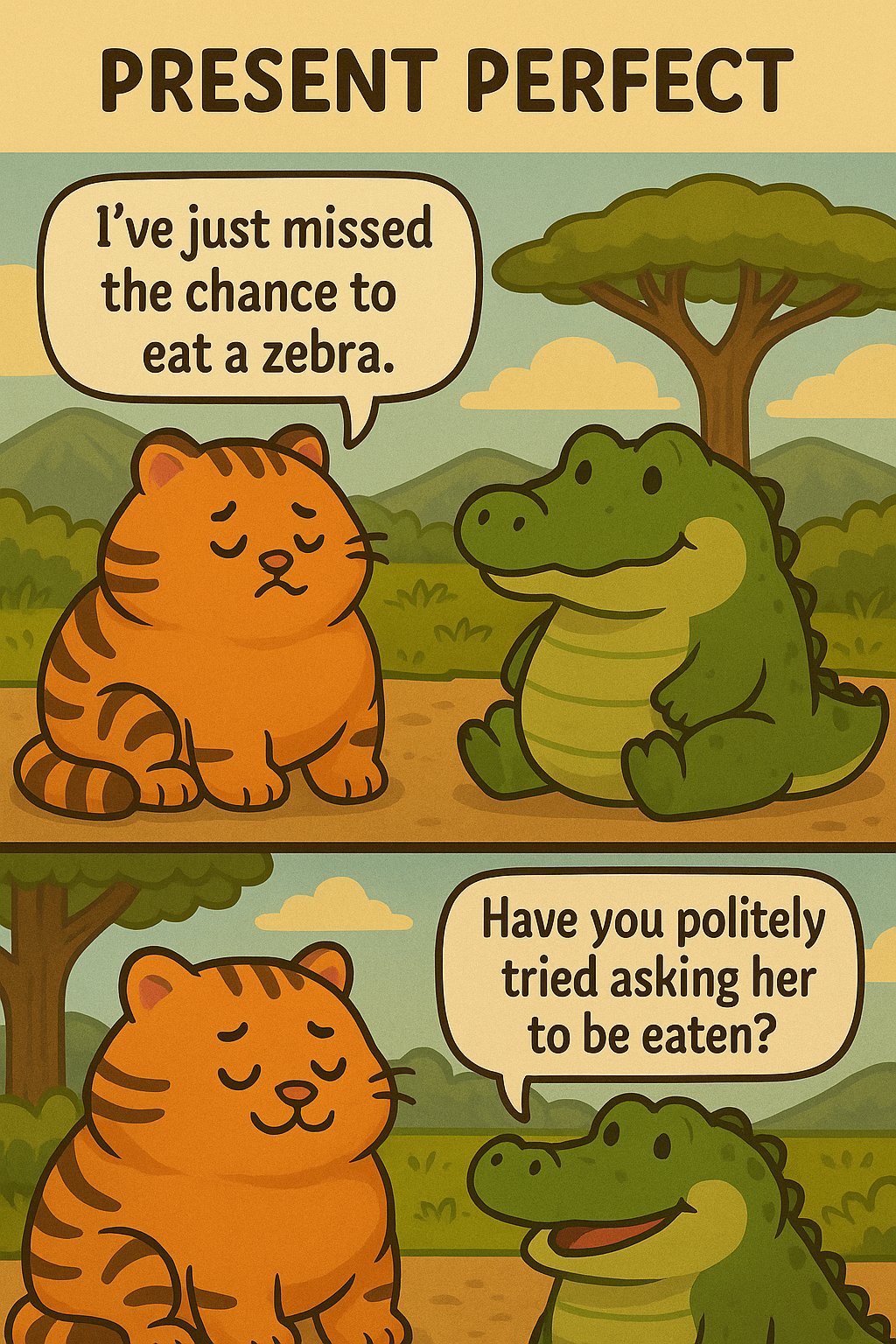
Il Present Perfect: Esperienze e Azioni Recenti
📌 Indice della Lezione
🎯 Obiettivo della lezione
In questa lezione imparerai a usare il Present Perfect 📖 per parlare di esperienze di vita, azioni recenti e connessioni tra passato e presente. Capirai come costruirlo 🧠, quando usarlo ✍️ e farai subito pratica reale con il test interattivo in fondo alla pagina! 🚀
🌟 Cos’è il Present Perfect?
Il Present Perfect collega il passato con il presente 🔗. Si usa principalmente per tre motivi:
- Esperienze di vita 🧳: Azioni accadute in un momento non specificato del passato.
Esempio:I have visited Japan.➔ (Sono stato in Giappone.) - Azioni recenti 🕒: Qualcosa che è appena successo.
Esempio:They have just arrived.➔ (Sono appena arrivati.) - Connessione col presente 🔑: Un’azione passata con un effetto evidente ora.
Esempio:I have lost my keys.➔ (Ho perso le chiavi – e ora non posso entrare!)
🔍 Come si forma il Present Perfect?
La regola base è universale:
Soggetto + HAVE / HAS + Participio Passato
| Soggetto | Ausiliare | Participio Passato | Esempio |
|---|---|---|---|
| I / You / We / They | have (‘ve) | worked / eaten / gone | We have eaten lunch. 🍽️ |
| He / She / It | has (‘s) | worked / eaten / gone | She has gone to the store. 🛒 |
💡 Attenzione al Participio Passato:
- Verbi Regolari: aggiungono -ed (es.
work ➔ worked,visit ➔ visited). - Verbi Irregolari: usano la 3ª colonna del paradigma (es.
go ➔ gone,eat ➔ eaten,see ➔ seen).
⏱️ Parole chiave comuni con il Present Perfect
| Parola | Significato | Posizione | Esempio |
|---|---|---|---|
| Just | Appena | Tra have/has e participio | I have just finished. |
| Already | Già | Tra have/has e participio | She has already left. |
| Yet | Ancora / Già | In fondo alla frase (negazioni/domande) | Haven’t you finished yet? |
| Ever / Never | Mai (domande / affermative) | Tra have/has e participio | Have you ever been to Rome? |
🧩 Schema riassuntivo – Present Perfect
| Forma | Struttura | Esempio |
|---|---|---|
| Affermativa | Subject + have/has + Past Participle | He has finished his homework. 📚 |
| Negativa | Subject + haven’t/hasn’t + Past Participle | They haven’t arrived yet. ⏱️ |
| Interrogativa | Have/Has + Subject + Past Participle? | Have you seen my keys? 🔑 |
❓ Dubbi frequenti
- Uso il Past Simple o il Present Perfect?
➔ Use il Past Simple quando il tempo è specificato e concluso (es. yesterday, last year, in 2010). Usi il Present Perfect quando il tempo non è specificato o l’azione ha un legame col presente. - Il participio passato è uguale al passato semplice?
➔ Per i verbi regolari sì (-ed), ma per gli irregolari varia (es. go ➔ went ➔ gone). - Possiamo usare “just”, “already” e “yet”?
➔ Sì! Sono indicatori perfetti per arricchire le frasi al Present Perfect.
🚫 Errori comuni da evitare
| Errore ❌ | Corretto ✅ |
|---|---|
| She have finished. | She has finished. (Terza persona ➔ has) |
| I has gone to school. | I have gone to school. (Prima persona ➔ have) |
| We have eat dinner. | We have eaten dinner. (Serve il participio passato!) |
| I have seen him yesterday. | I saw him yesterday. (Tempo preciso ➔ Past Simple) |
📌 Ricorda la regola d’oro
- ✔️ Present Perfect ➔
have / has + Participio Passato - ✔️ Usalo per esperienze, azioni recenti o connessioni al presente!
- ✔️ Mai usare il verbo alla forma base dopo have/has!
Pratica subito con il test qui sotto! ✨
Gap Fill & Translation Exercises
Mettiti alla prova! Nelle prime 15 frasi, inserisci la forma corretta al Present Perfect o la parola chiave mancante. Nelle ultime 5, traduci in inglese.