
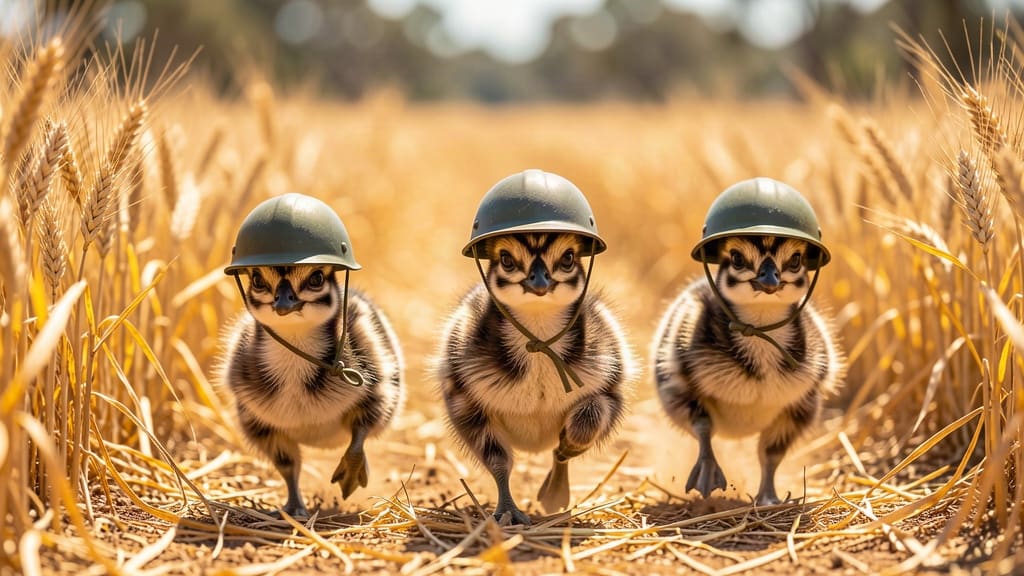
Immagina la scena. Australia, 1932. L'esercito ha a disposizione soldati addestrati, mitragliatrici e un nemico. Il nemico: gli emù.
Sì, gli emù. Quei grossi uccelli che non volano, alti come un adulto, con il collo lungo e l'aria di chi sta per farti una domanda impertinente. (E no, non sono struzzi: sono cugini lontani, ma lo scherzo ci stava.)
Come è nata la guerra?
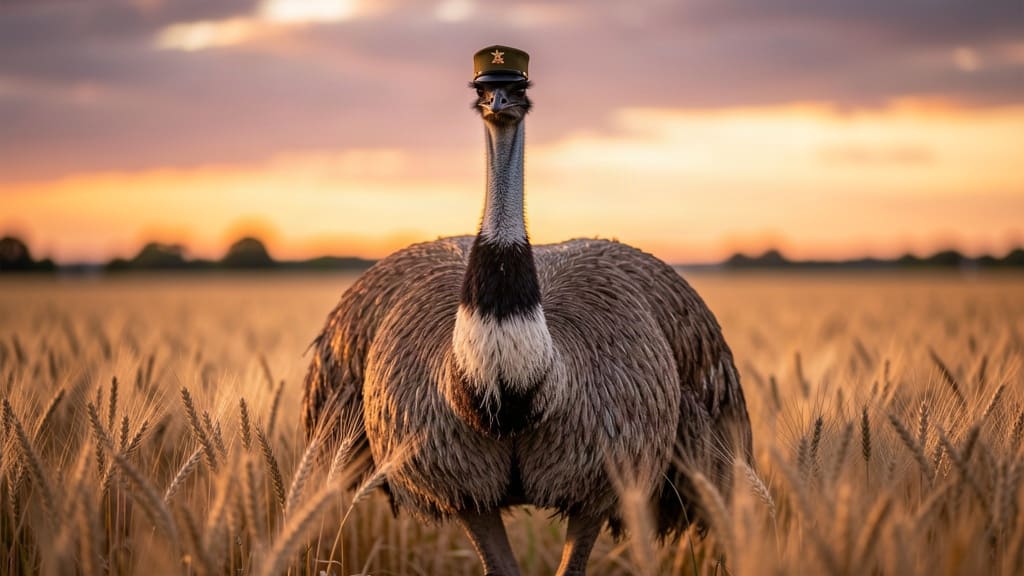
Dopo la Prima guerra mondiale, molti ex soldati ricevettero terre nell'Australia Occidentale per coltivare grano. Poi arrivò la crisi economica, il prezzo del grano crollò, e nel 1932 circa ventimila emù (la stima è approssimativa) migrarono verso quelle zone, mangiando e distruggendo i raccolti. Gli agricoltori, disperati, chiesero aiuto al governo.
Il governo mandò l'esercito. Il maggiore Meredith con due soldati e mitragliatrici Lewis. L'idea era semplice: sparare agli emù mentre erano raggruppati.
Cosa andò storto?
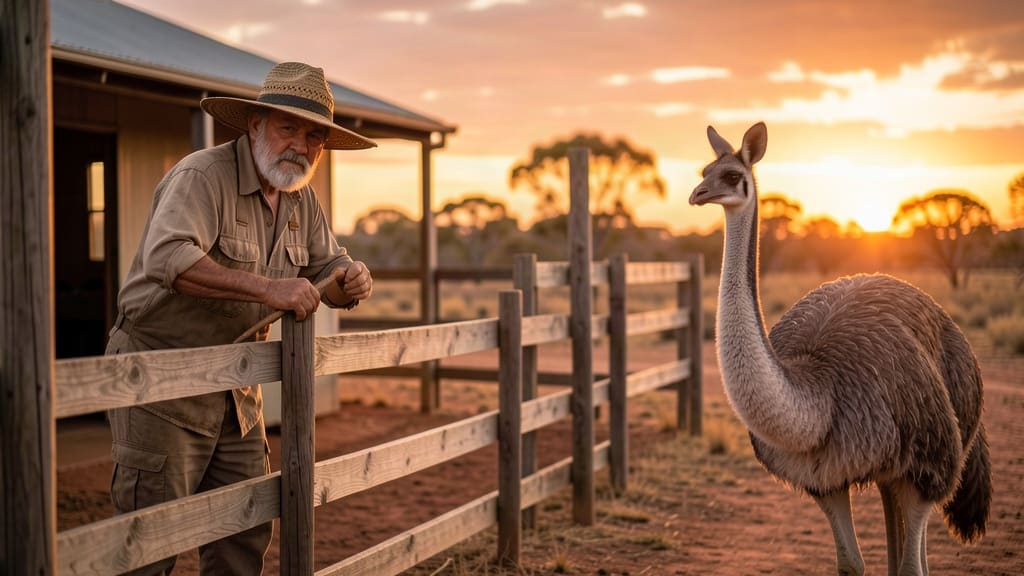
Quasi tutto. Gli emù, appena sentivano gli spari, si disperdevano in piccoli gruppi e correvano velocissimi in direzioni diverse. Erano difficili da colpire e sorprendentemente resistenti. Le mitragliatrici erano troppo pesanti per inseguirli, e i soldati usavano un mucchio di proiettili per pochi risultati. Dopo pochi giorni, l'operazione fu sospesa.
Le cifre esatte sono discusse, ma il punto è chiaro: l'esercito ci provò, e la situazione restò più o meno la stessa. Ci fu un secondo tentativo, con risultati migliori ma comunque non risolutivi.
Il problema fu alla fine risolto in modo più noioso: con premi in denaro per chi eliminava gli emù, e con recinzioni. Una soluzione meno spettacolare di una guerra, ma molto più efficace.
Morale: a volte le battaglie si vincono con le mitragliatrici, a volte con una recinzione. E a volte, contro un emù, non si vince proprio.
Imagine this. Australia, 1932. The army has trained soldiers, machine guns, and an enemy. The enemy: emus.
Yes, emus. Those big birds that can't fly, as tall as an adult, with a long neck and the look of someone who is about to ask you a rude question. (And no, they are not ostriches. They are distant cousins, but the joke was too good.)
How did the war begin?
After World War I, many former soldiers received land in Western Australia to grow wheat. Then the economic crisis came and the price of wheat fell. In 1932, about twenty thousand emus (the number is only an estimate) came to those areas and destroyed the crops. The farmers asked the government for help.
The government sent the army: Major Meredith, two soldiers, and Lewis machine guns. The plan was simple: shoot the emus when they were together.
What went wrong?
Almost everything. When the emus heard the shots, they split into small groups and ran very fast in different directions. They were hard to hit and very strong. The machine guns were too heavy to follow them. The soldiers used a lot of bullets for a few results. After a few days, the operation was stopped.
The exact numbers are still discussed, but the point is clear: the army tried, and the problem stayed more or less the same. There was a second attempt, with better results but still not a solution.
In the end, the problem was solved in a more boring way: with money rewards for people who killed emus, and with fences. Less spectacular than a war, but much more useful.
Lesson: sometimes you win a battle with machine guns. Sometimes you win with a fence. And sometimes, against an emu, you just don't win.