
📌 Indice della Lezione
🎯 Obiettivo della lezione
In questa lezione impari a passare dal discorso diretto (Direct Speech) al discorso indiretto (Reported Speech). Capirai quando si usa, come si trasformano i tempi verbali, quali verbi di comunicazione usare e come evitare errori! 🚀
🧠 Cos’è il discorso diretto e indiretto?
1. Discorso Diretto (Direct Speech)
Nel discorso diretto, riporti esattamente le parole di qualcuno. Le virgolette (“…”) vengono sempre usate.
- She said, “I’m tired.” 😴
- Tom asked, “Where are you going?” 🧳
- “I love pizza,” he said. 🍕
2. Discorso Indiretto (Reported Speech)
Nel discorso indiretto, riporti il contenuto del messaggio, ma non le parole esatte. Non ci sono virgolette, e i tempi verbali spesso cambiano.
- She said that she was tired. 😴
- Tom asked where I was going. 🧳
- He said that he loved pizza. 🍕
🔄 “Backshift”: Come cambiano i tempi verbali
Quando il verbo introduttivo (say, tell, ask…) è al passato, il tempo del discorso si sposta indietro nel passato. Questo fenomeno si chiama backshift.
| Tempo Diretto 🗣️ | Tempo Indiretto 📝 | Esempio |
|---|---|---|
| Present Simple | Past Simple | “I eat pizza.” ➝ He said he ate pizza. |
| Present Continuous | Past Continuous | “I am reading.” ➝ She said she was reading. |
| Past Simple | Past Perfect | “I went to Rome.” ➝ She said she had gone to Rome. |
| Present Perfect | Past Perfect | “I have done it.” ➝ He said he had done it. |
| Will | Would | “I will call you.” ➝ He said he would call me. |
| Can | Could | “I can swim.” ➝ She said she could swim. |
Quando NON si cambia il tempo?
✔️ Quando il verbo introduttivo è al presente o futuro: She says she likes tea. 🍵
✔️ Quando il fatto è ancora una verità assoluta: “The sun rises in the east.” ➝ She said the sun rises in the east. ☀️
⚠️ Say vs Tell: Errori comuni degli italiani
| Errore ❌ | Corretto ✅ | Spiegazione |
|---|---|---|
| She said me… | She told me… | “Say” non regge il complemento oggetto diretto. Usa “tell”. |
| He told that he was tired. | He said that he was tired. | “Tell” va seguito da una persona. |
| He asked to me if… | He asked me if… | “Ask” regge direttamente la persona. |
| He said: “he is here.” | He said he was there. | Ricorda il backshift e il cambio di spazio/tempo! |
❓ Domande dirette → indirette
Se il discorso diretto è una domanda, la struttura cambia e diventa affermativa (niente più inversione soggetto/verbo)!
- Yes/No questions: Usa ask + if/whether.
“Do you like it?” ➝ She asked if I liked it. - WH- questions: Usa ask + wh-word + soggetto + verbo.
“Where is he?” ➝ She asked where he was.
“What time is it?” ➝ He asked what time it was.
📍 Altri cambi nel discorso indiretto
| Parola Diretta | Parola Indiretta |
|---|---|
| today | that day |
| tomorrow | the next day |
| yesterday | the day before |
| now | then |
| here | there |
| this / these | that / those |
Gap Fill Exercises – Reported Speech
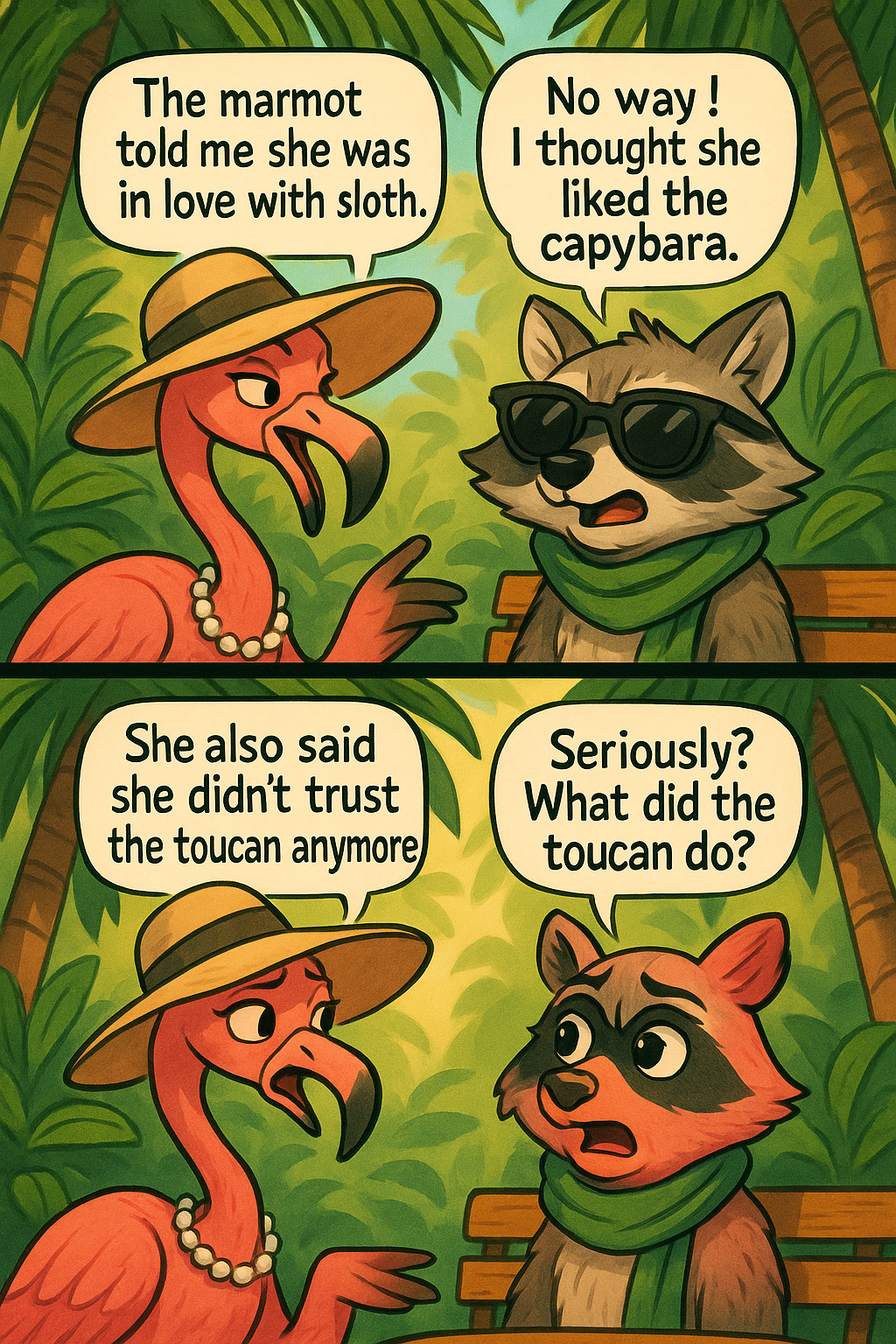
Aiuta gli animali della giungla a riportare i messaggi! Trasforma la frase diretta in indiretta applicando le regole del Backshift.