
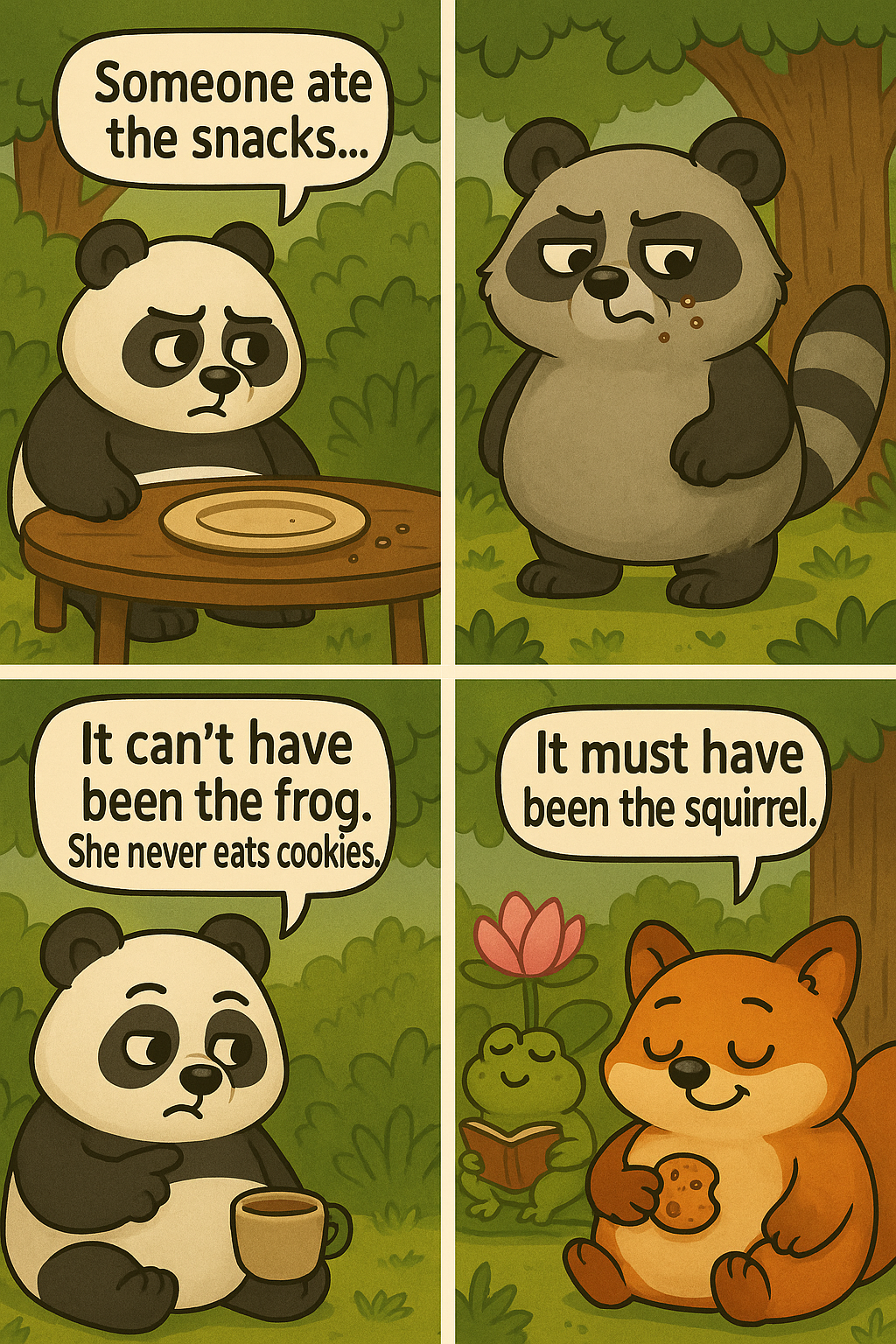
Modals of Deduction: Must, Might and Can’t
📌 Lesson contents
🎯 Lesson goal
In this lesson you will learn to use the modal verbs must, might and can’t 📖 to make deductions and guesses about the present. You will see how to show different levels of certainty 🧠 and you can practise straight away with the quiz at the bottom of the page! 🚀
🌟 What are modals of deduction?
We use modals of deduction when we guess or work something out from the information or evidence we have now.
- Must ➔ You are almost sure something is TRUE ✅ (~90-99%)
- Might ➔ It is possible that it is true, but you are NOT sure 🤔 (~30-50%)
- Can’t ➔ You are almost sure something is NOT true / impossible ❌ (~90-99%)
🔍 Must – Positive Certainty ✅
Use must when you have very strong clues or proof and you think something is almost certainly true (“it has to be…”).
Formula: Subject + must + base verb
📌 Examples:
- He owns 5 luxury cars. He must be very rich. 🚗💰
- Look at all that snow! It must be freezing outside. ❄️
🔍 Might – Possibility and Uncertainty 🤔
Use might (or may/could) when you make a guess but you are not sure (“perhaps it is…”).
Formula: Subject + might + base verb
📌 Examples:
- She isn’t answering her phone. She might be in a meeting. 📱❓
- Where is John? He might be at home or at the gym. 🏠
🔍 Can’t – Negative Certainty ❌
Use can’t when you have enough clues to say something is logically impossible (“it is not possible that…”).
Formula: Subject + can’t + base verb
📌 Examples:
- It’s 3:00 AM. That can’t be the delivery man at the door! 🚪❌
- You just ate a huge pizza! You can’t be hungry already. 🍕❌
🧩 Summary table – Must / Might / Can’t
| Modal | Level of certainty | Meaning | Example |
|---|---|---|---|
| Must | 90-99% TRUE | It has to be… | He must be tired. 🥱 |
| Might | 30-50% POSSIBLE | Perhaps it is… | She might be busy. 💼 |
| Can’t | 90-99% FALSE | It is not possible that it is… | It can’t be true! 🚫 |
❓ Basic questions answered
- Can I use “mustn’t” to say something is impossible?
➔ NO! This is the most common mistake. For negative deduction, always use can’t. Mustn’t only means something is forbidden! - Can I use “may” or “could” instead of “might”?
➔ Yes! For present possibility, might, may and could are almost the same. - Do modals change with he/she/it?
➔ No! Modals never take an -s (e.g. He must be, NOTHe musts be).
🚫 Common mistakes to avoid
| Mistake ❌ | Correct ✅ |
|---|---|
| It mustn’t be true! | It can’t be true! (Use can’t for impossibility!) |
| He musts be rich. | He must be rich. (Modals don’t take -s) |
| She might to be at home. | She might be at home. (No ‘to’ after a modal) |
👉 Remember: modal + base verb WITHOUT “to”! For impossibility, always use CAN’T!
📌 Final summary
- Must ➔ You are almost sure something is true ✅
- Might ➔ It is possible, but not certain 🤔
- Can’t ➔ You are almost sure something is not true / impossible ❌
Look at the clues around you and make deductions in English every day! ✨
Gap Fill & Translation Exercises
Test yourself! In the first 15 sentences, complete with ‘must’, ‘might’ or ‘can’t’ and the verb in brackets. In the last 5, say the sentence in English from the situation given.