
So, Neither, Nor, Either and Too (Agreeing with Someone)
📌 Lesson Contents
🎯 Lesson goal
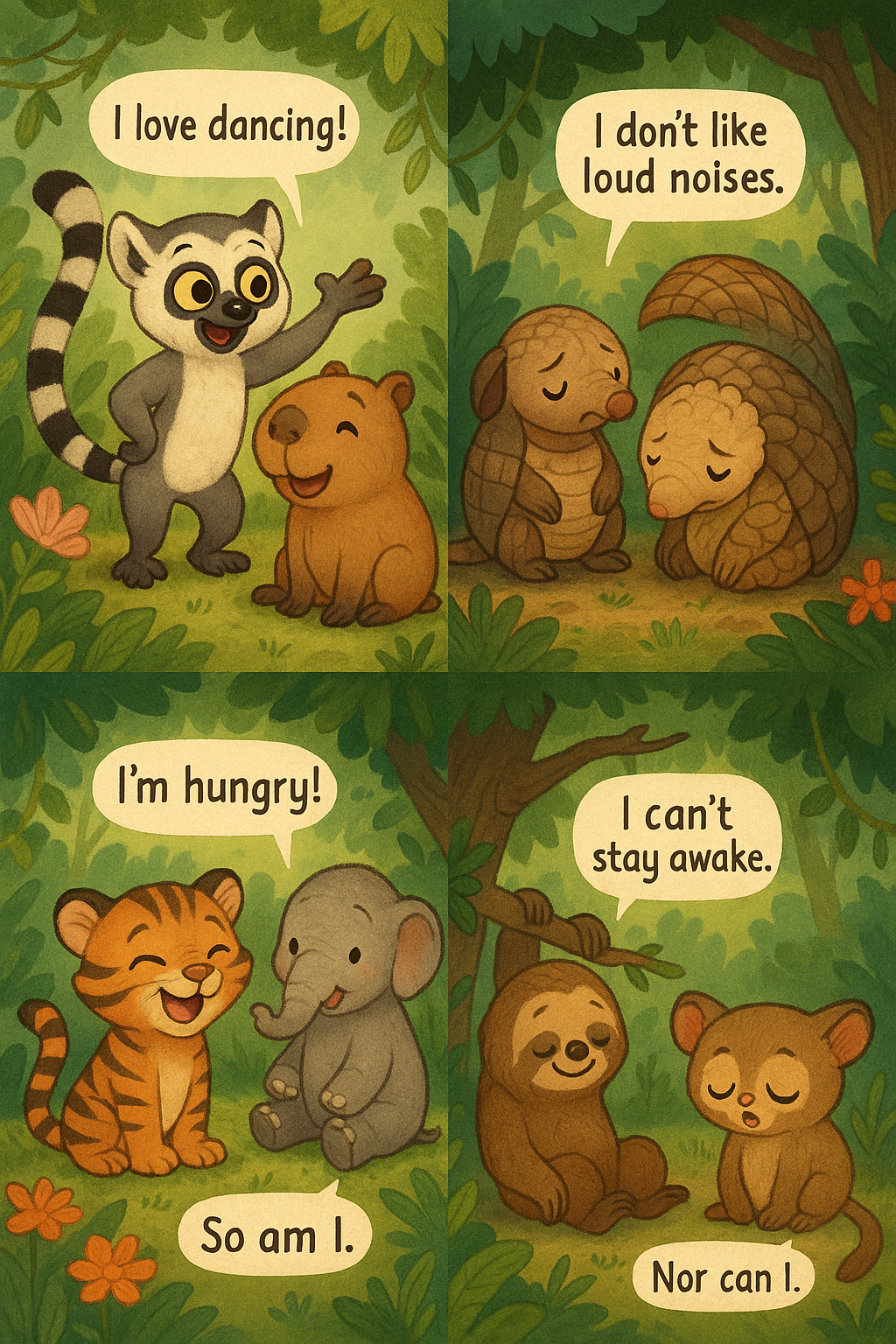
In this lesson you will learn to use either, neither, so, nor and too 📖 to say that something is also true for another person, in both affirmative and negative sentences. You will see how to build them correctly 🧠 and get real practice with the quiz at the bottom of the page! 🚀
🌟 When do we use them?
These expressions show that you agree with what someone else said, in a positive way (“me too!”) or a negative way (“me neither!”):
- So ➔ to agree with an affirmative sentence (e.g. So do I)
- Neither / Nor ➔ to agree with a negative sentence (e.g. Neither do I)
- Too ➔ to add an affirmative idea at the end of a sentence (e.g. I do too)
- Either ➔ to add a negative idea at the end of a sentence (e.g. I don’t either)
🔍 Structure of the correct forms
1. Agreeing with affirmative sentences ➔ So + auxiliary + subject
- I am happy. ➔ So am I. (I am happy too.)
- She likes tennis. ➔ So do I. (I like tennis too.)
- They have arrived. ➔ So have we. (We have arrived too.)
2. Agreeing with negative sentences ➔ Neither / Nor + auxiliary + subject
- I don’t like it. ➔ Neither do I.
- He hasn’t finished. ➔ Neither have I.
- She isn’t coming. ➔ Nor am I. (I am not coming either.)
🔍 The casual alternative
In informal speech we often use very common shortcuts:
- I love pizza. ➔ Me too. (I love it too.)
- I don’t drink coffee. ➔ Me neither.
🔍 Using “either” and “too”
Instead of the inversion with So/Neither, you can put too or either at the end of your answer and keep the normal word order:
- Affirmative sentences (… too):
I like cats. ➔ I do too. / Me too. - Negative sentences (… either):
I don’t like cats. ➔ I don’t either. / Me neither.
🧩 Summary table
| Case | Structure | Example |
|---|---|---|
| Affirmative agreement | So + auxiliary + subject | She is tired. So am I. |
| Negative agreement | Neither / Nor + auxiliary + subject | They can’t swim. Neither can I. |
| Affirmative addition | Subject + auxiliary + too | I like jazz. I do too. |
| Negative addition | Subject + negative auxiliary + either | I don’t dance. I don’t either. |
❓ Frequent doubts
- Can I use “Me too / Me neither” instead of So/Neither?
✔️ Yes, they are perfect for everyday spoken English, although less formal. - Can we say “I don’t like it too”?
❌ No! After a negative sentence we must use either at the end: ✅ I don’t like it either. - Do I need a negative form after “neither”?
❌ No! Neither is already negative, so the auxiliary stays positive: ✅ Neither do I (notNeither don’t I).
🚫 Common mistakes to avoid
| Mistake ❌ | Correct ✅ |
|---|---|
| I don’t like it too. | I don’t like it either. |
| Neither I do. | Neither do I. (The auxiliary goes before the subject!) |
| So I am. | So am I. |
| He doesn’t like it. Nor I do. | Nor do I. |
Gap Fill & Translation Exercises
Test yourself! In the first 15 sentences, complete the reply that shows agreement (e.g. ‘So’, ‘do’, ‘Neither’, ‘too’, ‘either’). In the last 5, write the reply in English from the situation given.