
Short Questions and Answers with the Verb “To Be”
📌 Lesson Contents
🎯 Lesson goal
In this lesson you learn to ask questions and give short answers with the verb to be 📖. You will see how they are formed, when to use them and why they are important for speaking English in a natural, clear and direct way. At the end you can test yourself with the quiz at the bottom of the page! 🚀
🔍 How do we form questions?
To ask a question with the verb “to be”, just swap the order: the verb goes before the subject.
[Be] + [Subject] + […]
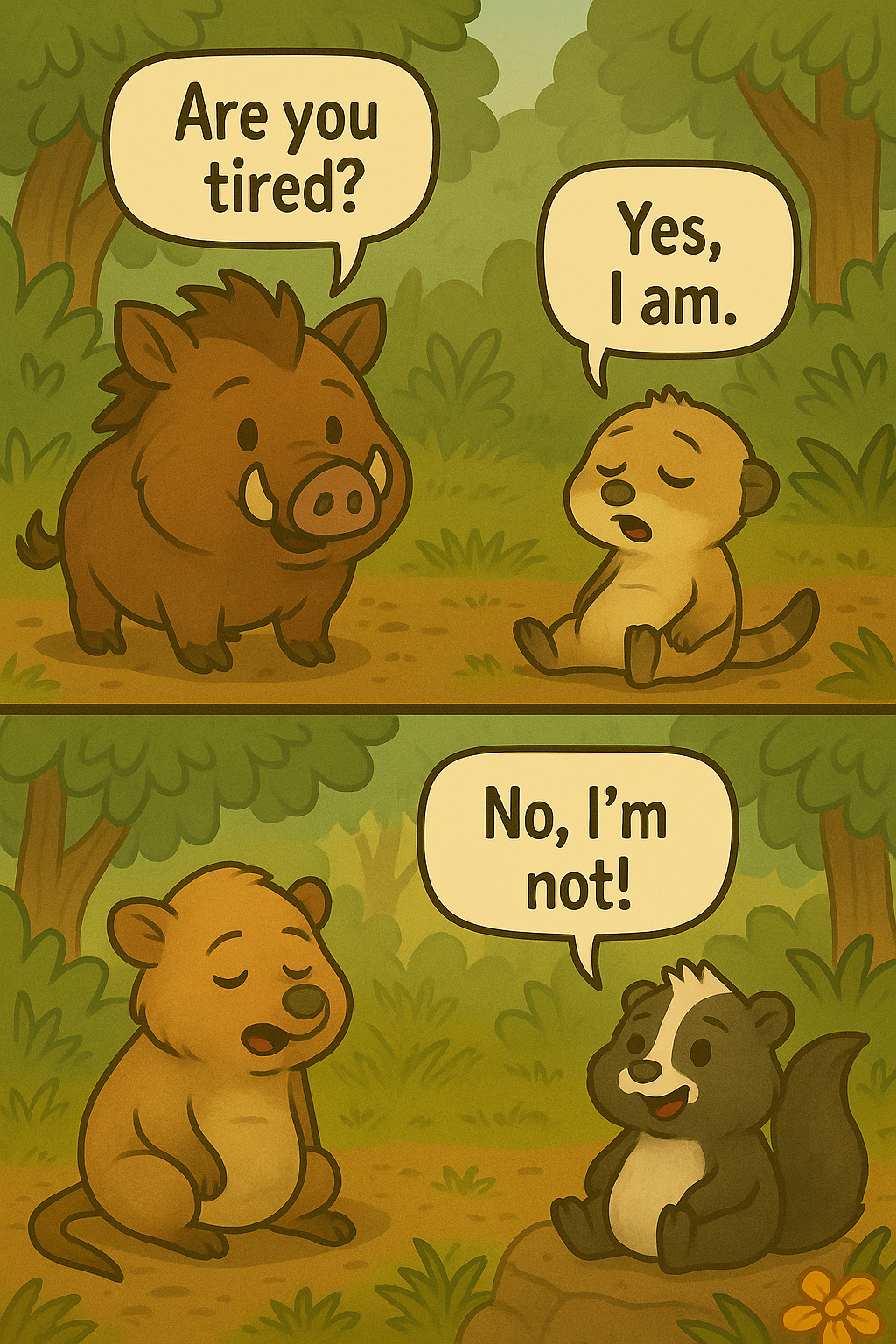
- Are you tired? 😴
- Is she your friend? 🤝
- Am I late? ⏰
🧩 Guide chart – Questions with “To Be”
| Verb | Subject | Example | Use |
|---|---|---|---|
| Am | I | Am I wrong? | (checking if I am wrong) |
| Are | You | Are you ready? | (asking if someone is ready) 🏁 |
| Is | He / She / It | Is it cold? | (asking about the weather) ❄️ |
| Are | We / You / They | Are they happy? | (asking about feelings) 😊 |
✅ Short answers: how do we build them?
Short answers are used all the time. They follow a fixed pattern: Yes/No + subject pronoun + verb to be.
- Yes, I am. / No, I’m not.
- Yes, she is. / No, she isn’t.
- Yes, we are. / No, we aren’t.
📋 Full chart – Short answers
| Question | Affirmative answer 🟢 | Negative answer 🔴 |
|---|---|---|
| Are you… ? | Yes, I am. | No, I’m not. |
| Is he… ? | Yes, he is. | No, he isn’t. |
| Are they…? | Yes, they are. | No, they aren’t. |
| Am I…? | Yes, you are. | No, you aren’t. |
❓ Frequently asked questions
- Why use short answers?
✔️ Because this is the natural way to answer in English. It sounds polite and direct. - Can I just say “Yes” or “No”?
❌ Better not, especially with strangers. It is grammatically correct, but a bare yes or no can sound cold or rude. - Do we use them in speaking too?
✔️ Yes, especially in speaking! They are a pillar of everyday conversation.
❌ Common mistakes to avoid
| Mistake ❌ | Correct ✅ | Explanation |
|---|---|---|
| Are you teacher? | Are you a teacher? | Before singular job words you always need a/an. |
| Yes, I’m. | Yes, I am. | Golden rule: never use contractions in affirmative short answers. |
| No, she not. | No, she isn’t. / No, she’s not. | In a negative answer the verb to be must be there, in full or contracted. |
Gap Fill & Translation Exercises
Test yourself! In the first 15 sentences, fill in the correct verb or short answer in the dialogues. In the last 5, say the question and short answer in English from the clue (level A1).