
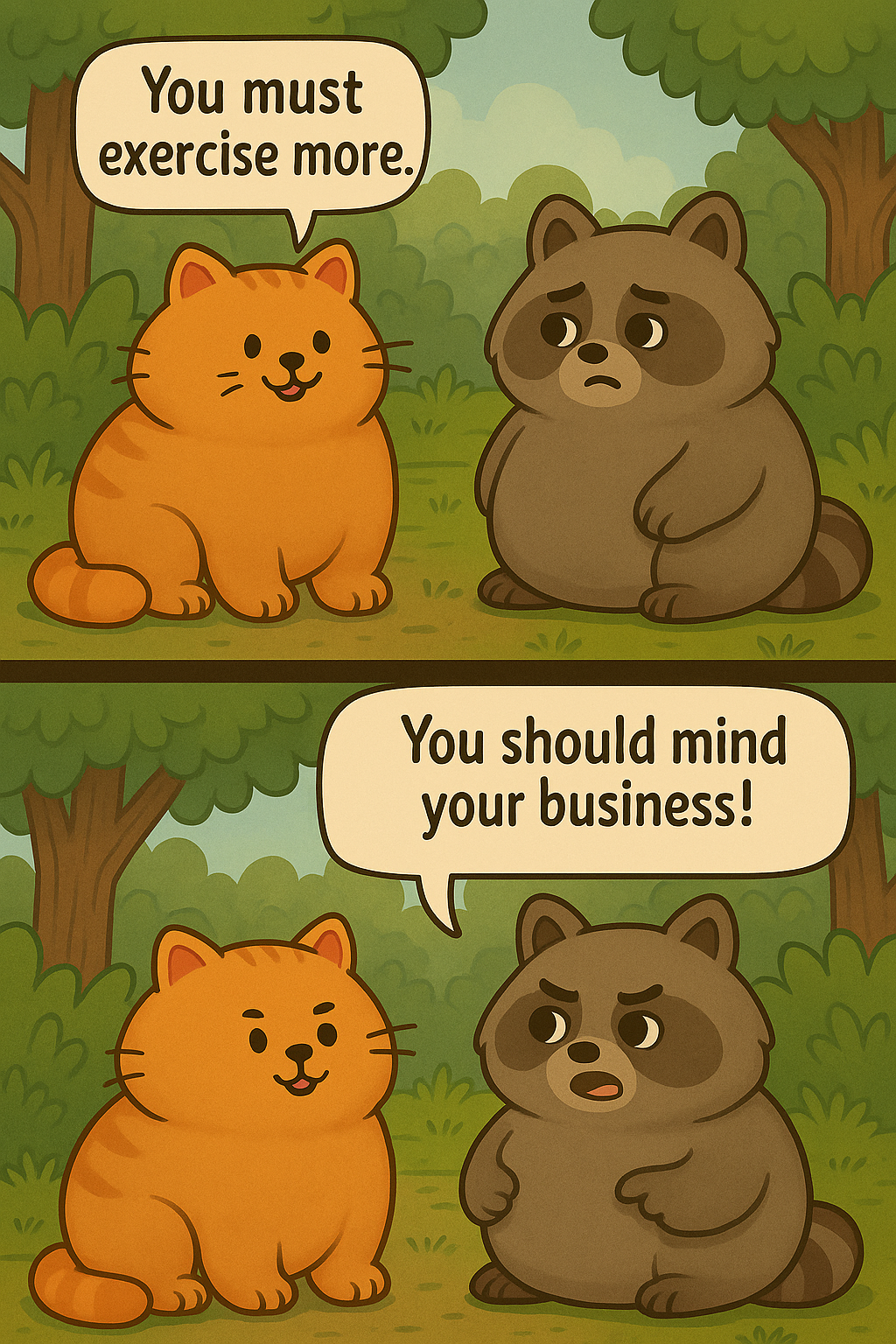
Must, Should and Have to (Obligation and Advice)
📌 Contents
🎯 Lesson goal
In this lesson you learn to use must, should and have to 📖 to talk about obligation, advice and need. You will see when to use them 🧠, how to form them ✍️ and you can practise straight away with the test at the bottom of the page! 🚀
🌟 What are modal verbs?
Modal verbs are special verbs that go with a main verb and change its meaning 📚. We use them to give advice, make rules, and show need or obligation.
🔍 Must – Use and meaning
Must is used for:
- Strong, personal obligation ➔ moral rules or important decisions that the speaker feels! ❗
- Urgent need ➔ something you absolutely have to do.
Formula: Subject + must + base verb
📌 Examples:
- You must wear a seatbelt. 🚗
- I must study for the exam. 📚
- He must call his boss. ☎️
🔍 Should – Use and meaning
Should is used for:
- Advice and suggestions ➔ the best or most sensible thing to do ✅
- Personal opinions ➔ saying what we think is right or correct.
Formula: Subject + should + base verb
📌 Examples:
- You should eat more vegetables. 🥦
- She should go to the doctor. 🏥
- We should leave now. ⏰
🔍 Have to – Use and meaning
Have to is used for:
- External obligation ➔ rules made by other people, laws or official timetables 📜
- Objective need ➔ things we must do because we have no choice.
Formula: Subject + have to + base verb (has to ➔ for he/she/it)
📌 Examples:
- I have to work tomorrow. 🖥️
- She has to finish her homework. 📖
- They have to wear uniforms. 👔
🧩 Summary table – Must, Should, Have to
| Modal | Main use | Example |
|---|---|---|
| Must | Strong personal obligation / Urgency | You must be careful. ⚠️ |
| Should | Advice / Suggestion / Opinion | You should sleep more. 🛏️ |
| Have to | External obligation / Objective need | I have to go to school. 🏫 |
❓ Basic questions answered
- Can I use “must” and “have to” in the same way?
➔ Sometimes they overlap, but must shows a personal obligation, one the speaker feels, while have to is about a rule from outside (laws, timetables, the boss). - Is there a difference between “have to” and “has to”?
➔ Yes! Use has to with the third person singular (he, she, it). - Do we need the base verb after must/should/have to?
➔ Yes! Always the base form without to (e.g. must go, should eat, have to study).
🚫 Common mistakes to avoid
| Mistake ❌ | Correct ✅ |
|---|---|
| He musts call his boss. | He must call his boss. (Never add -s to must!) |
| She have to do her homework. | She has to do her homework. (With she we need has to!) |
| You should to study. | You should study. (Should does not take ‘to’!) |
👉 Remember: Must and Should NEVER take ‘to’. Have to already has ‘to’ in it.
Gap Fill & Translation Exercises
Test yourself! In the first 15 sentences, complete with the correct form of ‘must’, ‘should’, ‘have to’ or ‘has to’ (and the verb). In the last 5, say the sentence in English using the word in brackets.