
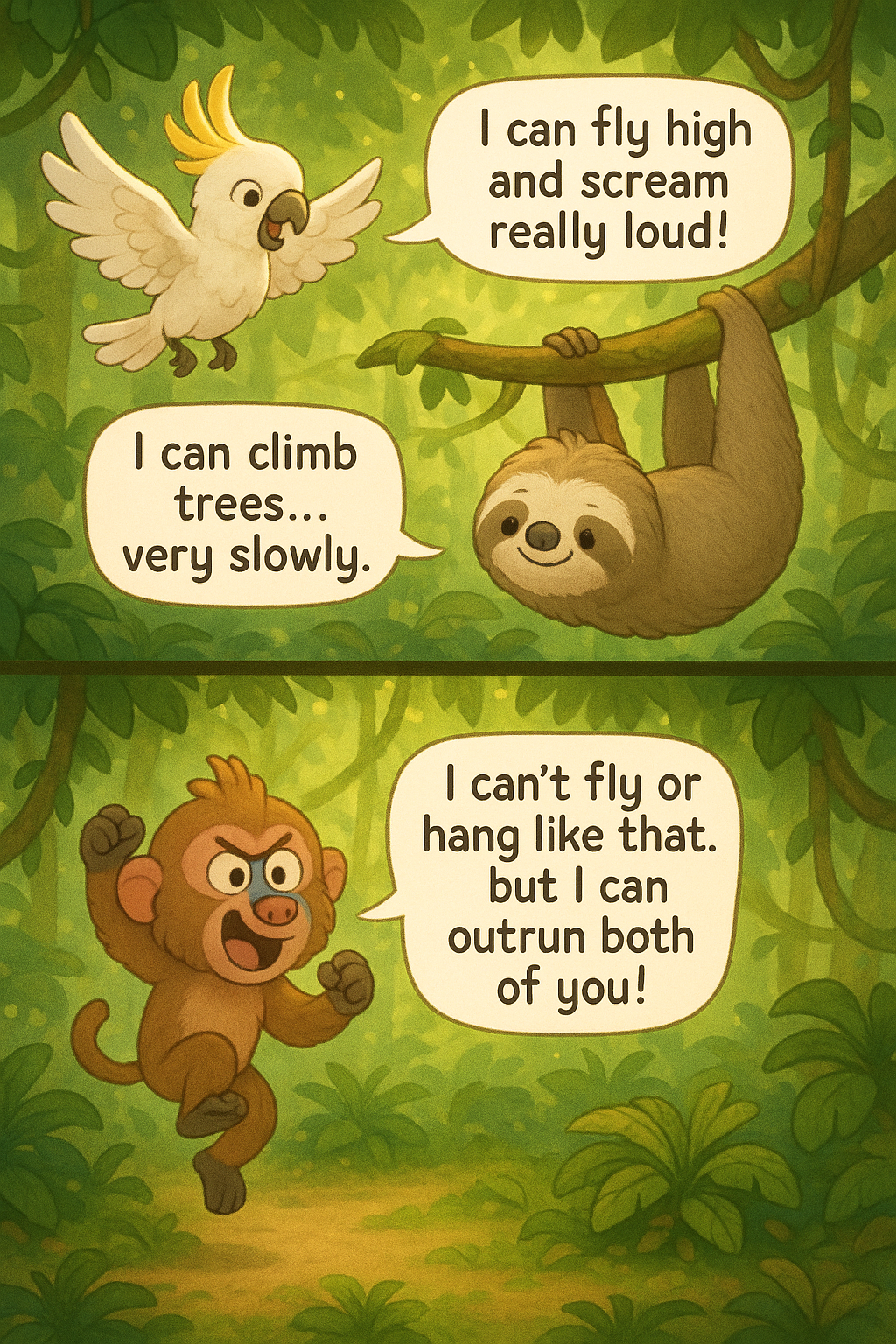
The Modal Verb Can (Ability and Possibility)
📌 Lesson Contents
🎯 Lesson goal
In this lesson you will learn to use can 📖 to talk about ability and possibility. You will see how to build affirmative, negative and question sentences simply and effectively 🧠, and at the end you can test yourself with the quiz at the bottom of the page! 🚀
🌟 When do we use “can”?
Can is a modal verb. We use it to express:
- Ability ➔ I can swim. (I know how to swim.) 🏊♂️
- Possibility ➔ We can go out now. (It is possible for us to go out.) 🚶♀️
- Permission (informal) ➔ Can I sit here? (Is it OK if I sit here?) 🪑
🔍 How do we use “can”?
| Type of sentence | Basic structure | Example |
|---|---|---|
| Affirmative | Subject + can + base verb | I can dance. 💃 |
| Negative | Subject + can’t + base verb | She can’t drive. 🚗 |
| Question | Can + subject + base verb? | Can you help me? 🙋♂️ |
💡 Note: the verb after can is always in the base form (no “to” and no -ing).
📌 Simple examples
- Affirmative sentences:
I can cook very well.
He can speak English. - Negative sentences:
I can’t sing.
They can’t play the guitar. - Questions:
Can you swim?
Can she come with us?
🧩 Summary table
| Structure | Example | Meaning |
|---|---|---|
| I can + verb | I can run fast. | I am able to run fast. |
| I can’t + verb | I can’t ride a bike. | I am not able to ride a bike. |
| Can + subject + verb? | Can he play the piano? | Is she able to play the piano? |
❓ Frequently asked questions
- Can we use “can” with all subjects?
✔️ Yes! “Can” never changes form. (E.g. I can, you can, he can, we can, they can…) - What is the past of “can”?
✔️ The past is could, but you will see it in the A2 lessons. - Do I need “to” after can?
❌ No! Never use “to”.
❌I can to swim.➔ ✅ I can swim.
🚫 Common mistakes to avoid
| Mistake ❌ | Correct ✅ |
|---|---|
| He cans speak Spanish. | He can speak Spanish. |
| She can to play tennis. | She can play tennis. |
| Can you to help me? | Can you help me? |
Gap Fill & Translation Exercises
Test yourself! In the first 15 sentences, fill in ‘can’ or ‘can’t’. In the last 5, put the situations into English.