
Participle & Absolute Clauses (C1/C2)
📌 Lesson Contents
🎯 Lesson goal
Participle Clauses and Absolute Clauses are the backbone of complex English syntax at C1 and C2 level (Cambridge Proficiency). They let you pack time, cause and contrast into one short phrase by dropping heavy conjunctions like because, after or while, giving your writing a smooth, academic and compact tone. 🚀
📌 1. Types of Participle Clauses
Depending on the time relationship and on whether the meaning is active or passive, we use different participle forms:
| Participle Form | Verb Structure | Function / Meaning | C1/C2 Example |
|---|---|---|---|
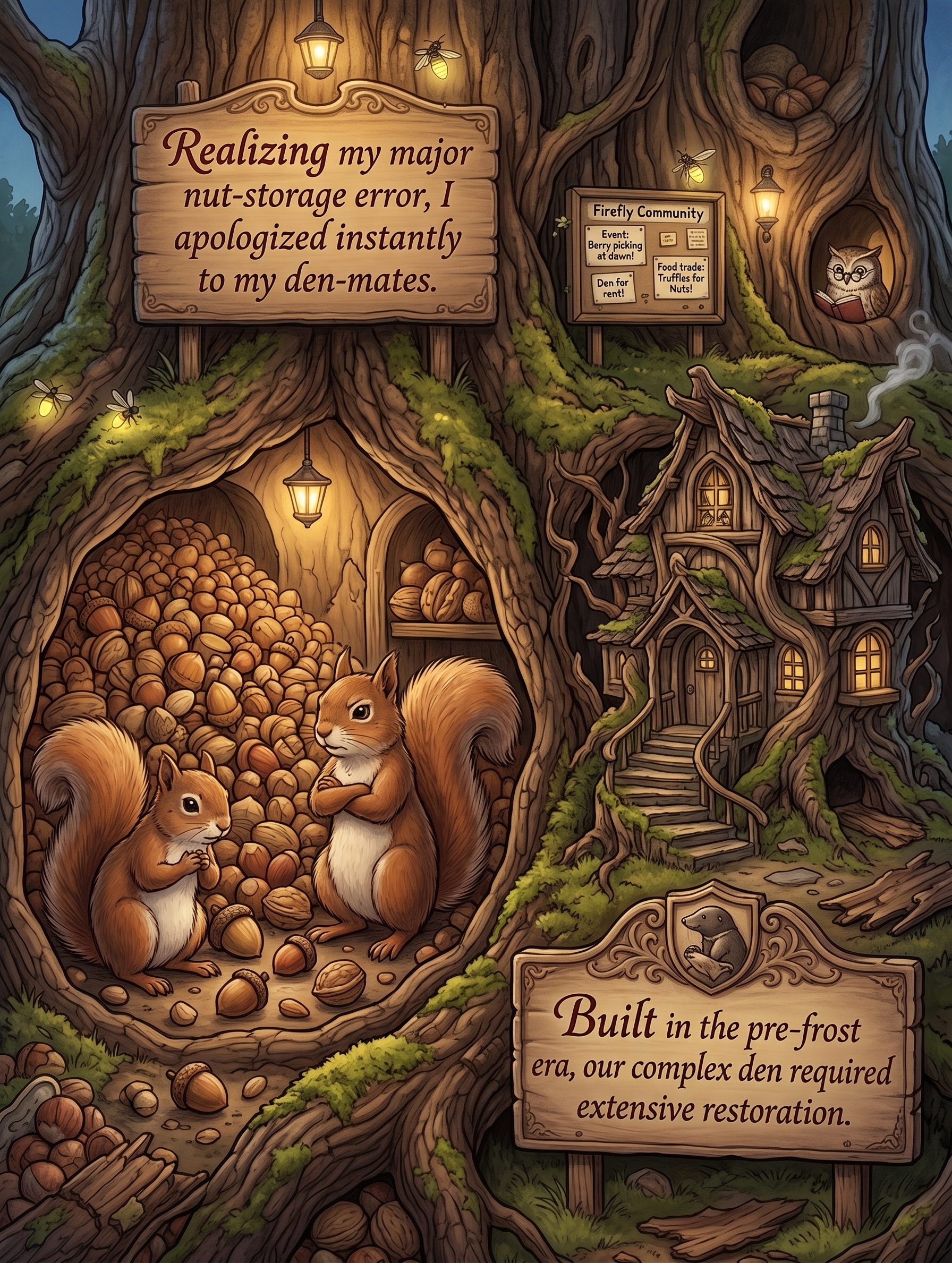
| Present Participle | Verb + -ing | Active action at the same time, or an immediate cause | Realizing my error, I apologized instantly. |
| Past Participle | Verb in -ed / 3rd column (past participle) | Passive meaning (replaces “which was/were”) | Built in 1890, the manor required restoration. |
| Perfect Participle | Having + Past Participle | Active action completed before the main action | Having finished the report, she submitted it. |
| Passive Perfect Participle | Having been + Past Participle | Passive action completed before the main action | Having been warned, they proceeded with care. |
⚙️ 2. How to build them: Step-by-Step Guide
To turn a long subordinate clause (cause, time, contrast) into an elegant Participle Clause, follow these steps:
- Step 1: Check that the subject is the same.
Both clauses must share exactly the same subject.
Original sentence: “Because she was exhausted, she fell asleep.” ✅ (Subject: she). - Step 2: Remove the conjunction and the subordinate subject.
Take out conjunctions like because, since, as, after, when.
Example:Because she wasexhausted… - Step 3: Change the verb into the right participle form.
– If the action is active and at the same time ➔ use -ing (e.g. Feeling tired…).
– If the action is passive ➔ use the Past Participle (e.g. Shocked by the news…).
– If the action happened before the main one ➔ use Having + Past Participle (e.g. Having completed the task…). - Step 4: Put the clause at the start, followed by a comma.
Final result: “Exhausted, she fell asleep.“
🌟 3. Absolute Clauses
What happens if the subordinate clause has a different subject from the main sentence? Then we create an Absolute Clause: the clause keeps its own subject, followed by the participle.
| Type of Absolute Clause | Structure | C1/C2 Example |
|---|---|---|
| Different Subject + Present Participle | Subject 2 + Verb-ing | Weather permitting, the outdoor concert will proceed. |
| Different Subject + Perfect Participle | Subject 2 + Having + Past Participle | The meeting having concluded, everyone left the hall. |
| Fixed Idiomatic Expressions | Set phrases for C2 writing | All things considered, it was a major success. That said, challenges remain. |
🚫 Common Mistakes: Dangling Participles
A Dangling Participle happens when the participle wrongly seems to refer to the wrong subject in the main clause:
| Serious Mistake (Dangling Participle) ❌ | C1/C2 Correction ✅ |
|---|---|
| Walking down the street, a car hit him. (It sounds as if the car was walking down the street!) | Walking down the street, he was hit by a car. / While he was walking down the street, a car hit him. |
| Having cooked dinner, the TV was turned on. (Did the TV cook the dinner?) | Having cooked dinner, she turned on the TV. |
1. Gap Fill & Transformation Test (15 Questions)
Complete the sentences by turning them into correct participle structures or absolute clauses.
2. Extra: Sentence Builder 🧩
Tap the words to move them and rebuild perfect participle clauses and absolute clauses!